The Best Time of Year to Pour Concrete in Indiana
The Best Time to Schedule

When Is the Best Time to Schedule Your Concrete Project in Indiana?

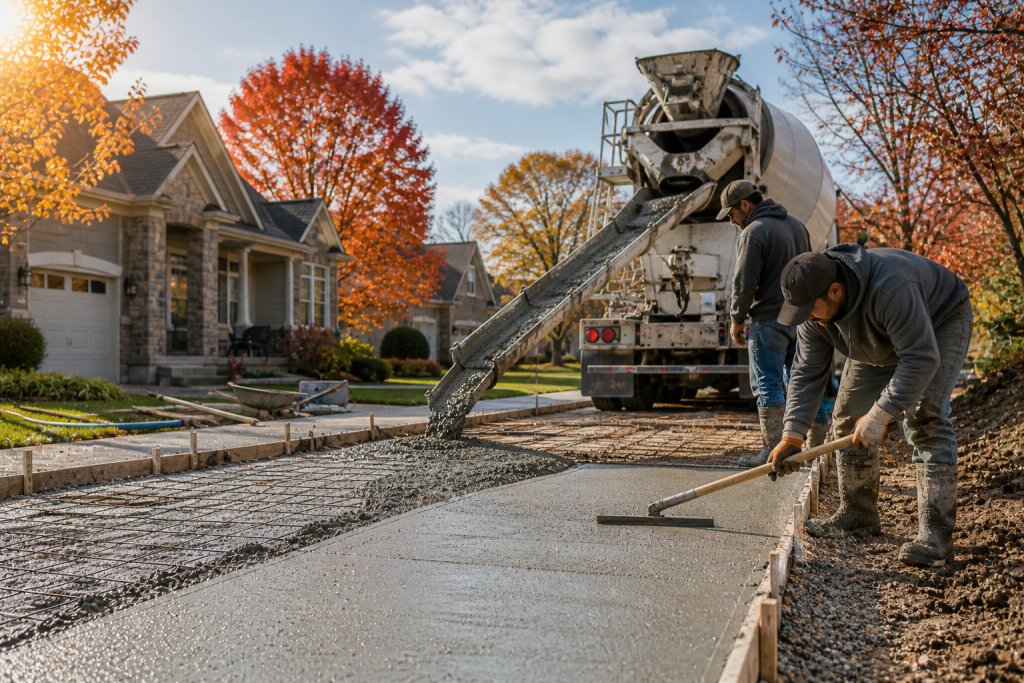
Timing matters when it comes to concrete work. Unlike many home improvement projects that can be completed comfortably in any season, concrete installation is significantly affected by weather conditions, particularly temperature and moisture. Pouring concrete in the wrong conditions can compromise the strength, durability, surface quality, and long-term performance of the finished product, regardless of how skilled the contractor or how good the materials.
For homeowners in Northwest Indiana, where we experience the full range of seasonal extremes from hot, humid summers to bitterly cold winters, understanding the best time of year to schedule concrete work is an important part of project planning. The right timing can improve the quality of your finished concrete, reduce the risk of weather-related problems, provide more flexible scheduling, and potentially even affect pricing.

At Black Rock Concrete, we pour concrete throughout the extended construction season in the Valparaiso, Crown Point, Portage, and greater Northwest Indiana area, typically from early spring through late fall. However, conditions within this window vary considerably, and some periods are more favorable than others for different types of concrete work. This guide breaks down the seasonal considerations to help you plan your project for optimal results.

Understanding How Weather Affects Concrete
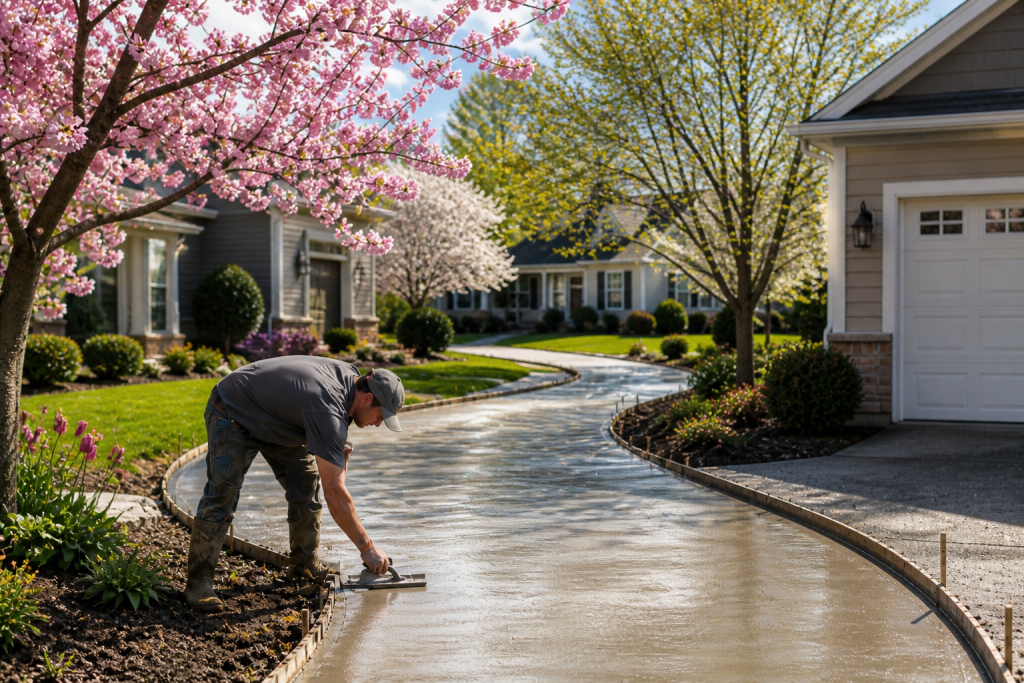
Before diving into seasonal recommendations, it is helpful to understand the basic science of how weather conditions affect concrete during and after placement. This knowledge will help you appreciate why timing matters and what your contractor is considering when they recommend a specific schedule for your project.
Temperature is the single most important weather factor for concrete work. Concrete gains its strength through a chemical reaction called hydration, in which the cement particles react with water to form the hard, crystalline structure that gives concrete its strength. This hydration process is highly sensitive to temperature. In moderate conditions, between roughly fifty and eighty degrees Fahrenheit, hydration proceeds at an ideal rate that produces strong, durable concrete with a good surface finish. When temperatures are too hot, hydration accelerates too rapidly, which can cause premature setting, increased cracking, and reduced ultimate strength. When temperatures are too cold, hydration slows dramatically and can essentially stop below freezing, resulting in weak, porous concrete that will not achieve its design strength.
Moisture in the form of rain is the other major weather concern. Rain falling on freshly placed and finished concrete can damage the surface finish, wash cement paste from the surface layer, create pitting and discoloration, and weaken the surface layer that is critical for durability and wear resistance. Even brief rain showers during the critical finishing window can compromise the quality of the surface.
Wind and humidity also affect concrete work by influencing the rate of surface moisture evaporation. High winds and low humidity can cause the concrete surface to dry too rapidly, leading to plastic shrinkage cracking, surface crusting, and finishing difficulties. Experienced contractors monitor wind and humidity conditions and take preventive measures such as wind barriers, fogging, and evaporation retarders when conditions warrant.
Understanding how Weather Affects Concrete

Spring: The Eagerly Awaited Start of Concrete Season

In Northwest Indiana, spring marks the beginning of the concrete construction season, with work typically resuming in March or April depending on weather conditions. Spring offers several advantages for concrete projects, along with some considerations that homeowners should be aware of. The primary advantage of scheduling your concrete project in spring is getting on the calendar early in the construction season. Concrete contractors in Northwest Indiana experience their heaviest demand during the summer months, and scheduling fills up quickly as the season progresses. By booking your project for spring, you are more likely to secure your preferred dates and avoid the longer wait times that are common during peak season.
Spring temperatures in Northwest Indiana are generally favorable for concrete work, with daytime highs typically ranging from the fifties into the seventies. These moderate temperatures promote ideal hydration conditions and give the finishing crew ample working time to achieve a high-quality surface. The cooler conditions also reduce the risk of the rapid-drying problems that can occur during the heat of summer. The primary challenge with spring concrete work is the unpredictability of Northwest Indiana’s spring weather. Late-season cold snaps can bring temperatures below the safe threshold for concrete placement, and spring is one of our region’s wetter seasons, with frequent rain events that can delay scheduled pours. Flexibility in scheduling is important for spring projects, as weather delays are more likely during this transitional season.
Soil conditions in spring can also present challenges. After the winter thaw, subgrade soils may be saturated with moisture, which can complicate excavation and base preparation work. Your contractor needs to evaluate soil conditions before proceeding to ensure the base is stable and dry enough to support the concrete installation. In some cases, waiting a few additional weeks for the soil to dry out is advisable. Overall, spring is an excellent time to pour concrete in Northwest Indiana if you are prepared for the possibility of weather-related schedule adjustments. Early to mid-spring is ideal for getting on the contractor’s schedule, while late spring typically offers more stable weather conditions as temperatures warm and the frequency of severe weather events decreases.
Spring the Eagerly Awaited Start of Concrete Season

Summer: Peak Season for Concrete Work
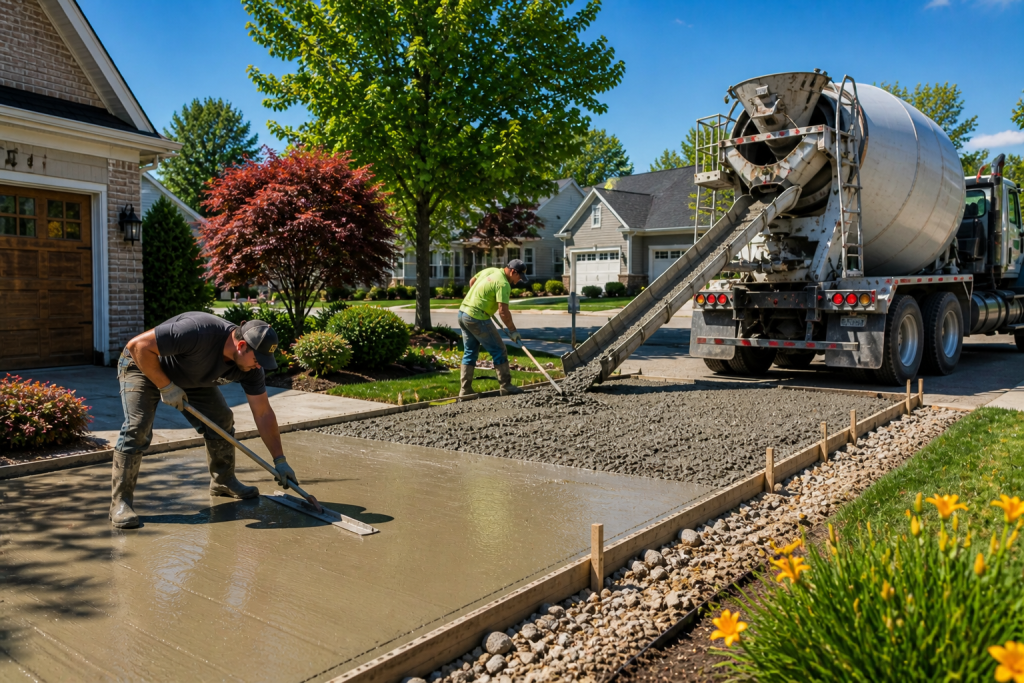
Summer is the busiest and most popular season for concrete work in Northwest Indiana, and for good reason. The consistently warm temperatures, longer daylight hours, and generally drier conditions create a reliable window for scheduling and completing concrete projects with confidence. The warm temperatures of summer, typically ranging from the seventies into the nineties, ensure that concrete hydration proceeds vigorously and that the material reaches its design strength efficiently. The longer days provide more working time for larger projects, and the generally favorable weather reduces the frequency of rain delays compared to spring.
However, summer heat presents its own set of challenges that experienced contractors must manage carefully. When temperatures exceed ninety degrees Fahrenheit, concrete can set too rapidly, making finishing difficult and increasing the risk of plastic shrinkage cracking, thermal cracking, and reduced ultimate strength. At Black Rock Concrete, we manage hot-weather conditions through several techniques including scheduling pours for early morning when temperatures are cooler, using ice or chilled water in the concrete mix to lower its temperature, applying evaporation retarders to slow surface drying, and ensuring adequate crew size for rapid, efficient placement and finishing.
The other significant challenge of summer is scheduling availability. Because summer is peak season for concrete contractors throughout Northwest Indiana, schedules fill up quickly and wait times for new projects can extend to several weeks or even months. If you know you want a summer installation, we strongly recommend contacting us as early as possible, ideally in late winter or early spring, to reserve your preferred dates.
Despite the heat management challenges, summer remains an excellent time for concrete work when handled by an experienced contractor who understands hot-weather placement techniques. The consistent conditions, reliable scheduling, and vigorous curing make summer the season when the most concrete projects are completed in our region.
Summer Peak Season for Concrete Work

Fall: The Sweet Spot for Concrete Quality

Many concrete professionals consider fall to be the ideal season for concrete work in Northwest Indiana, and with good reason. The moderate temperatures, lower humidity, and reduced extreme weather events of early to mid-fall create near-perfect conditions for concrete placement, finishing, and curing. September and October typically offer daytime temperatures in the fifties to seventies in our region, which is the sweet spot for concrete hydration. These temperatures promote steady, controlled curing that produces strong, durable concrete with excellent surface quality. The moderate conditions give the finishing crew comfortable working time without the urgency imposed by rapid setting in hot weather or the risk of freezing in cold weather.
Fall is also typically drier than spring, with fewer extended rain events that can disrupt construction schedules. This makes fall projects more likely to proceed on schedule without the frequent weather delays that characterize spring work. From a scheduling standpoint, fall can offer advantages over the peak summer months. While reputable contractors stay busy year-round, the intense scheduling pressure of summer often eases somewhat in fall, potentially providing more flexibility in choosing your preferred start date.

The primary consideration for fall concrete work is the approaching cold weather. Projects should be timed to allow adequate curing before the first hard freeze, which typically arrives in Northwest Indiana in late November or December. Concrete needs at least seven days of temperatures above forty degrees after placement to achieve sufficient strength to resist freeze-thaw damage. This means late October and November projects carry increasing risk and require careful monitoring of weather forecasts and potentially the use of cold-weather protection measures.
For most residential projects, early to mid-fall, roughly September through mid-October, represents the ideal combination of favorable curing conditions, reliable weather, and comfortable working temperatures. If you can schedule your project during this window, you are positioned for an excellent outcome.
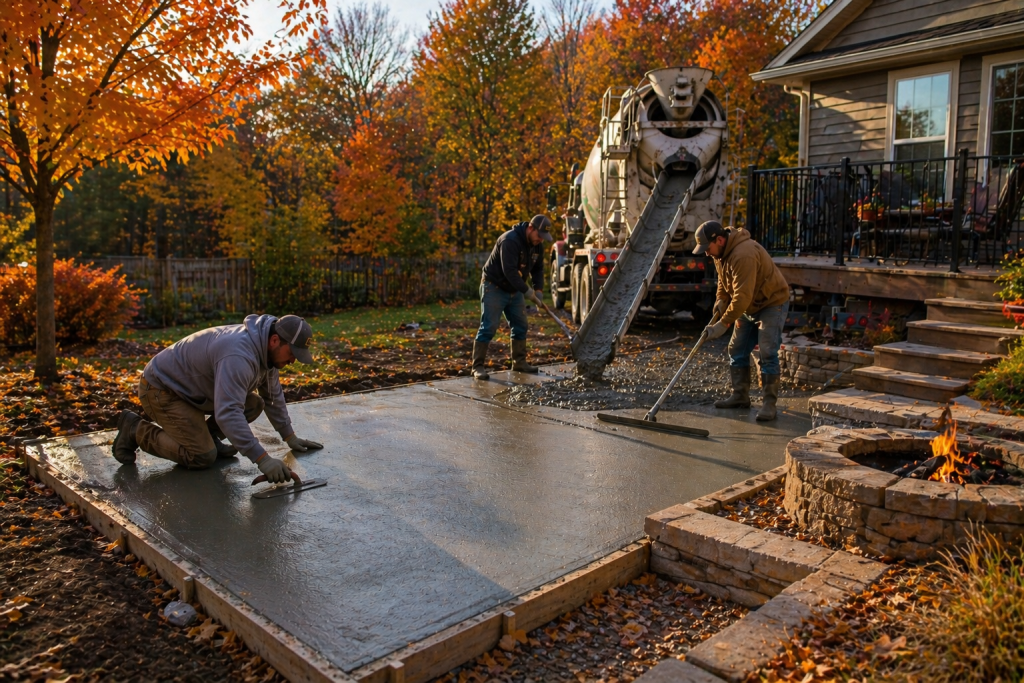
Fall the Sweet Spot for Concrete Quality
Winter the Off Season and Planning Opportunity

Winter: The Off-Season and Planning Opportunity

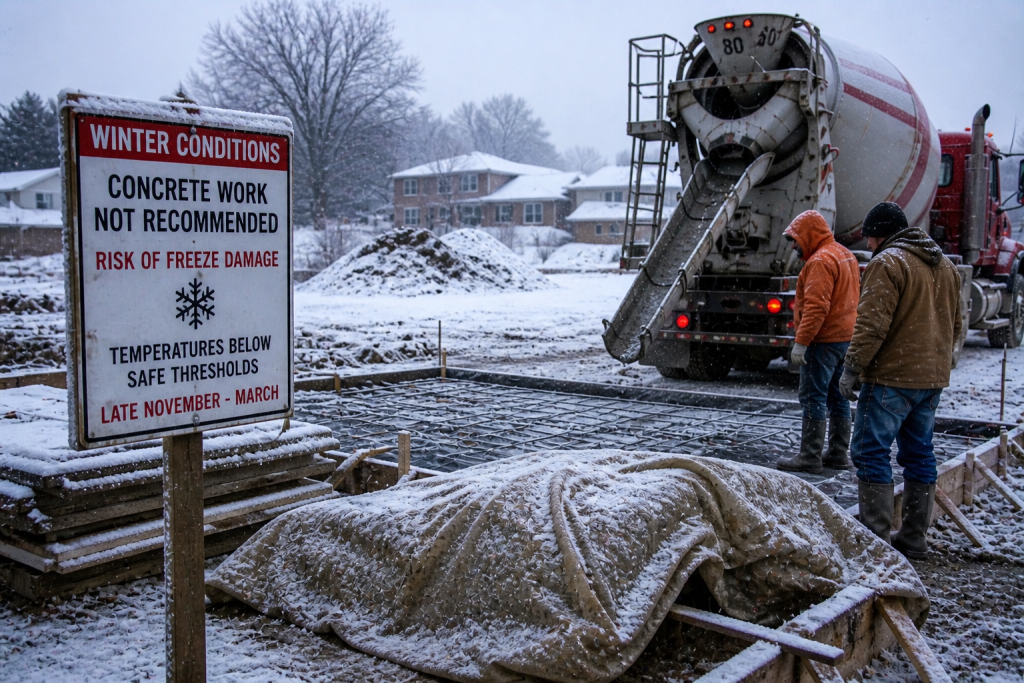
Winter is generally not suitable for concrete work in Northwest Indiana. Temperatures from late November through March regularly drop below the safe thresholds for concrete placement and curing, and the risk of freeze damage to fresh concrete is unacceptably high. Attempting to pour concrete in freezing or near-freezing conditions without extensive and expensive cold-weather protection measures is a recipe for weak, damaged concrete that will not perform to expectations.
However, winter is an excellent time to plan and schedule your upcoming concrete project for the following spring and summer season. Contacting a contractor during the winter months to discuss your project, obtain an estimate, and reserve your spot on the construction calendar is one of the smartest moves you can make. This proactive approach ensures you get your preferred dates, allows ample time for design decisions and planning, and positions your project to start as soon as conditions permit in spring.
At Black Rock Concrete, we use the winter months to meet with homeowners, evaluate project sites, develop proposals, and plan our production schedule for the upcoming season. Reaching out to us during the winter is a great way to get the planning process started without the time pressure that comes with trying to squeeze onto a packed summer schedule.

Choose the Best Time for Your Concrete Project

No matter what time of year you are reading this, the team at Black Rock Concrete is ready to help you plan your concrete project for optimal timing and results. Contact us today for a free consultation and estimate. We serve homeowners throughout Valparaiso, Portage, Crown Point, Chesterton, Merrillville, Hobart, Schererville, Munster, Highland, Griffith, Cedar Lake, Lowell, Hebron, Burns Harbor, Michigan City, and all of Northwest Indiana. We look forward to helping you choose the perfect time to invest in your property.