How to Prepare Your Property for a Concrete Pour
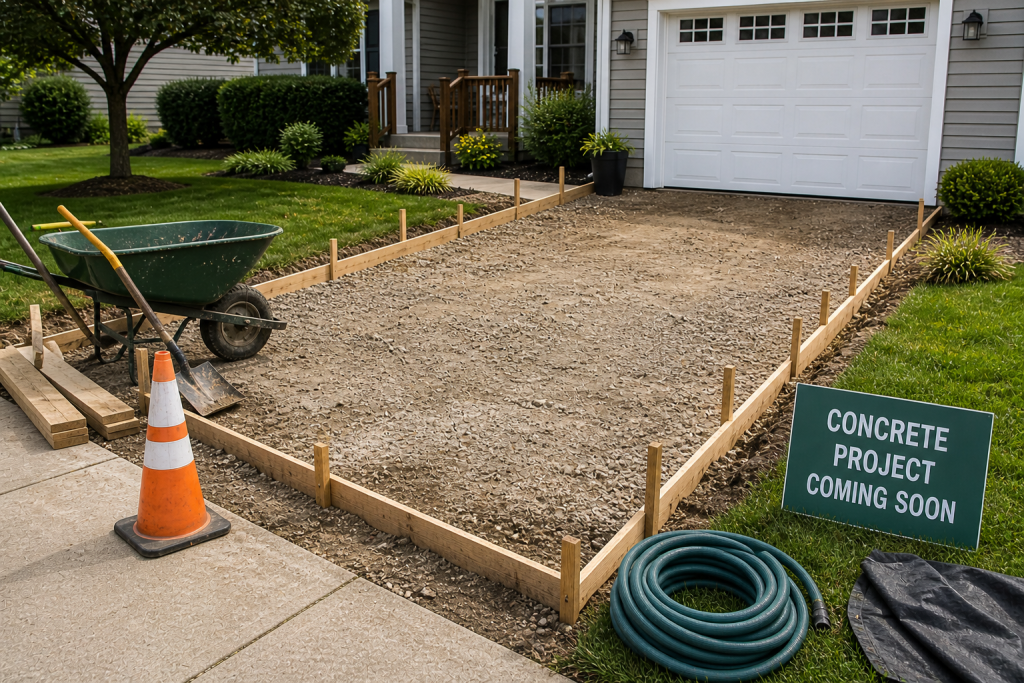
Getting Ready for your Concrete Project What Homeowners need to Know

Getting Ready for Your Concrete Project: What Homeowners Need to Know
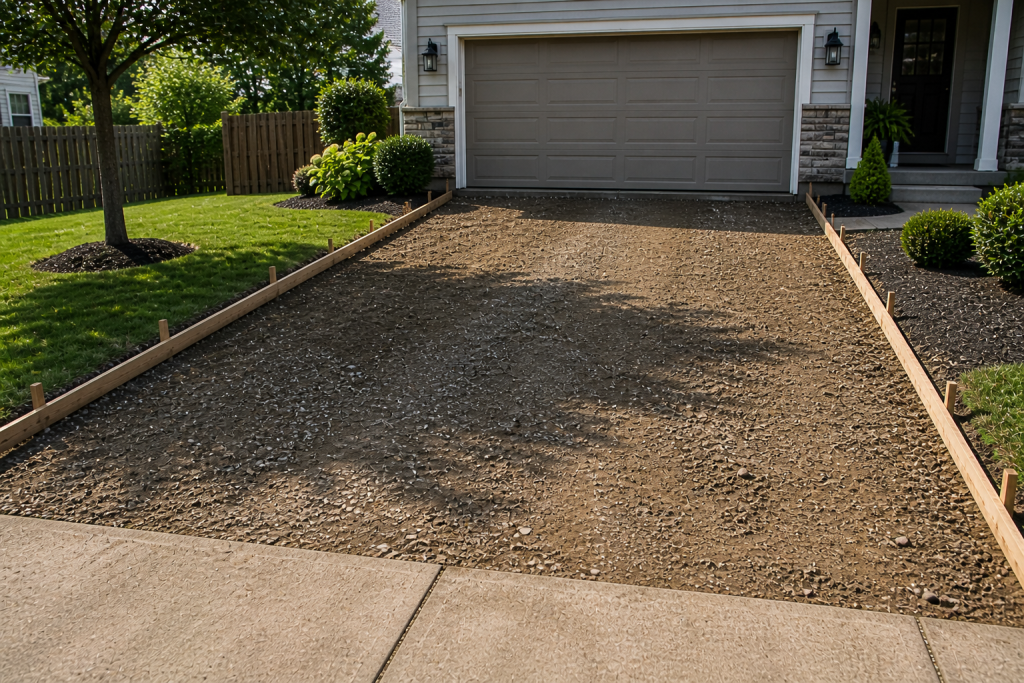
Congratulations on scheduling your concrete project. Whether you are getting a new driveway, patio, sidewalk, or any other concrete installation at your Northwest Indiana home, you are making a smart investment that will enhance your property for years to come. Now that the project is on the calendar, you might be wondering what you need to do before the crew arrives to ensure everything goes smoothly and your project gets off to the best possible start.
The good news is that your concrete contractor handles the heavy lifting when it comes to preparation, including excavation, grading, base installation, and all of the technical work required before concrete can be poured. However, there are several important steps you can take as a homeowner to prepare your property, protect your belongings, and set the stage for a productive, efficient work day that keeps the project on schedule and avoids unnecessary complications.
At Black Rock Concrete, we always walk our customers through the preparation steps specific to their project during the pre-construction planning phase. This guide covers the most common preparation tasks that apply to typical residential concrete projects in the Valparaiso, Crown Point, Portage, and greater Northwest Indiana area. By taking care of these items before your scheduled pour date, you help us work efficiently and deliver the best possible results for your project.
Clear the Work Area and Access Routes

Clear the Work Area and Access Routes

One of the most important things you can do to prepare for your concrete project is to make sure the work area and all access routes are completely clear of obstacles, personal belongings, and anything that could interfere with the construction process. Remove all vehicles from the driveway and surrounding areas where the crew will need to operate. Concrete trucks, equipment trailers, and work vehicles need substantial space to maneuver, park, and access the pour site. For driveway projects, obviously the entire driveway area needs to be clear, but you should also consider where the concrete truck will position itself for the pour and keep that area accessible as well. Your contractor can advise you on the specific access requirements for your project.
Move outdoor furniture, grills, planters, decorations, toys, and any other personal items away from the work area and the paths that the crew and equipment will use to access it. Even items that seem out of the way can sometimes interfere with equipment operation or get damaged by dust, debris, or accidental contact during construction. The safest approach is to move everything well away from the construction zone. Take down or relocate temporary structures like portable basketball hoops, swing sets that can be moved, clotheslines, and similar items that are near the work area. If these items cannot be moved, let your contractor know in advance so they can plan around them.
Trim back any bushes, tree branches, or vegetation that encroaches on the work area or access routes. The crew needs clear overhead and side clearance for equipment operation, form setting, and concrete placement. Cutting back vegetation before the crew arrives saves time and prevents accidental damage to your plants during construction. Ensure that gates are opened or removed if the crew needs to access a fenced backyard or side yard. Check that the gate opening is wide enough for the equipment that will be used, and remove gate hardware temporarily if needed to provide adequate clearance.

Address Utilities and Underground Services
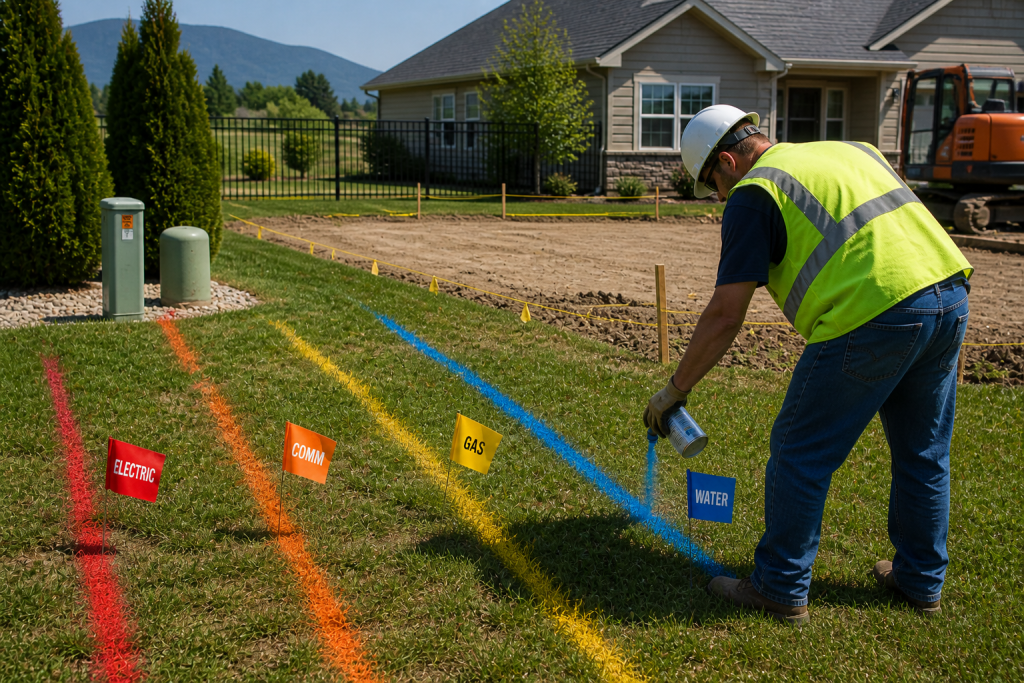
Before any excavation or ground disturbance begins on your property, it is essential that all underground utilities are properly located and marked. This includes gas lines, electric cables, water lines, sewer lines, telecommunications cables, irrigation systems, and any other underground services that cross or run near the work area. In Indiana, the law requires that you contact Indiana 811, the state’s utility locate service, before any digging project. You can request a utility locate by calling 811 or submitting a request online at least two full working days before excavation is scheduled to begin. The locate service will dispatch representatives from each utility company to mark the approximate location of their underground lines on your property using color-coded paint or flags. This service is free and is one of the most important safety steps in any construction project.
Your concrete contractor may handle the utility locate request as part of their project preparation, but it is a good idea to confirm this with them and verify that the locate has been completed before the scheduled start date. If the locate reveals utilities running through or near the work area, your contractor can plan the excavation accordingly to avoid damage.
In addition to public utilities, be aware of any private underground systems on your property that the utility locate service does not cover. These may include private septic systems, irrigation sprinkler lines, invisible fence wires, landscape lighting cables, drainage pipes, and any other buried systems that you have installed. Point these out to your contractor during the pre-construction walkthrough so they can take appropriate precautions.
If you have an irrigation system with sprinkler heads or lines in or near the work area, it is usually wise to have your irrigation company cap or relocate the affected zones before construction begins. This prevents damage to the system and avoids water leaks that could compromise the concrete work.
Address Utilities and Underground Services

Prepare Your Home and Protect Your Property
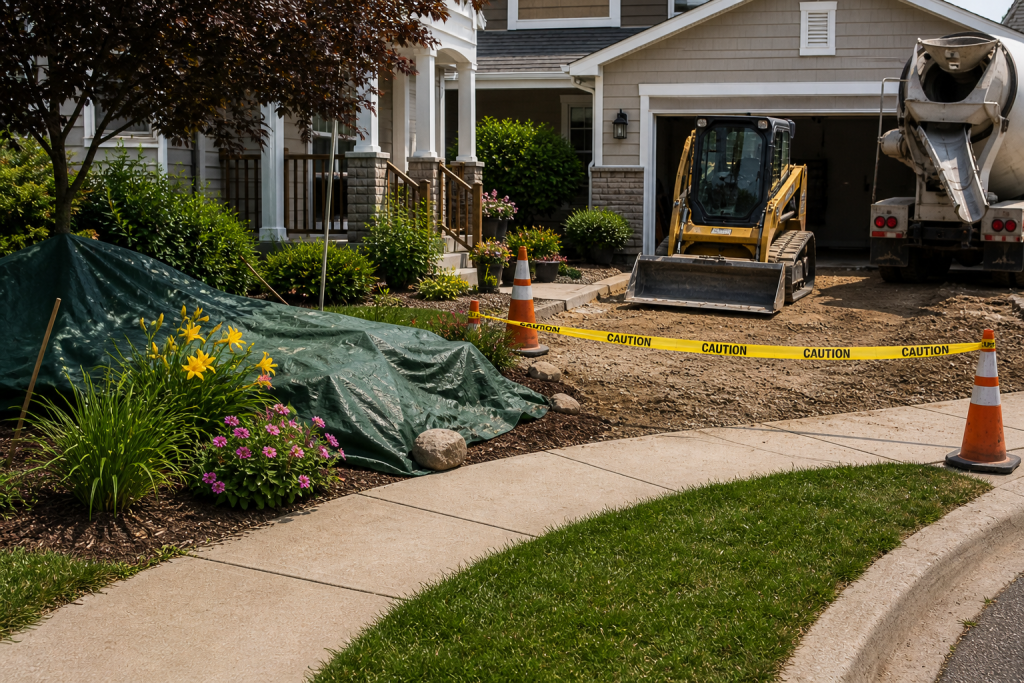
Concrete construction involves heavy equipment, large material deliveries, and activities that generate noise, vibration, dust, and debris. While your contractor will take precautions to minimize the impact on your property, there are steps you can take to protect sensitive items and prepare your household for the construction activity. Close windows and doors near the work area on the day of the pour to keep dust and noise out of your home. If you have sensitive landscaping, garden beds, or newly planted areas near the construction zone, consider covering them with tarps or landscape fabric for additional protection. Your contractor should also take steps to protect adjacent landscaping, but an extra layer of precaution from your side can help ensure your plants come through unscathed.
Secure pets indoors or in a safe area well away from the construction zone for the duration of the work. Construction sites present numerous hazards for curious pets, including heavy equipment, fresh concrete, tools, and materials that could be harmful if ingested or stepped in. Keeping pets safely contained also prevents them from running through fresh concrete, which would be a frustrating setback for everyone. Let your neighbors know about the upcoming project, especially if the work will affect shared driveways, parking areas, or access routes. A quick, friendly heads-up about the expected schedule, potential noise, and any temporary parking changes goes a long way toward maintaining good neighborly relations and avoiding surprises.
Plan for alternative access during the construction period. If your driveway is being replaced, you will obviously need to park elsewhere for the duration of the project and through the curing period, which is typically seven days before vehicle traffic should be allowed on new concrete. Identify alternative parking arrangements in advance so you are not scrambling on the day the work begins. Make arrangements for children’s safety if you have young kids at home during the project. Construction sites are inherently dangerous, and fresh concrete is caustic and can cause chemical burns on skin. Establish clear boundaries with your children about staying away from the work area, and supervise them closely if they are playing outdoors during construction.
Prepare your Home and Protect your Property

Understand the Timeline and Curing Requirements

Having realistic expectations about the project timeline and the curing requirements for new concrete will help you plan your daily routine and avoid inadvertently damaging the finished work before it has reached full strength. Most residential concrete projects take one to three days to complete, depending on the scope, complexity, and weather conditions. Your contractor should provide you with a specific estimated timeline for your project during the pre-construction planning phase. Keep in mind that concrete work is weather-dependent, and rain, extreme cold, or other adverse conditions may cause schedule adjustments.

After the concrete is poured and finished, it enters the curing phase, which is the period during which the concrete hardens and gains strength through a chemical process called hydration. Proper curing is critical for achieving maximum strength, durability, and surface quality, and it requires that the concrete maintain adequate moisture and temperature conditions for an extended period. As a general guideline for Northwest Indiana, you should expect to stay off new concrete for at least twenty-four hours for foot traffic and at least seven days for vehicle traffic after the pour. For large vehicles or heavy loads, waiting ten days or more is often advisable. Your contractor will provide specific curing time recommendations based on the concrete mix used, the ambient temperature conditions, and the thickness of your specific installation.
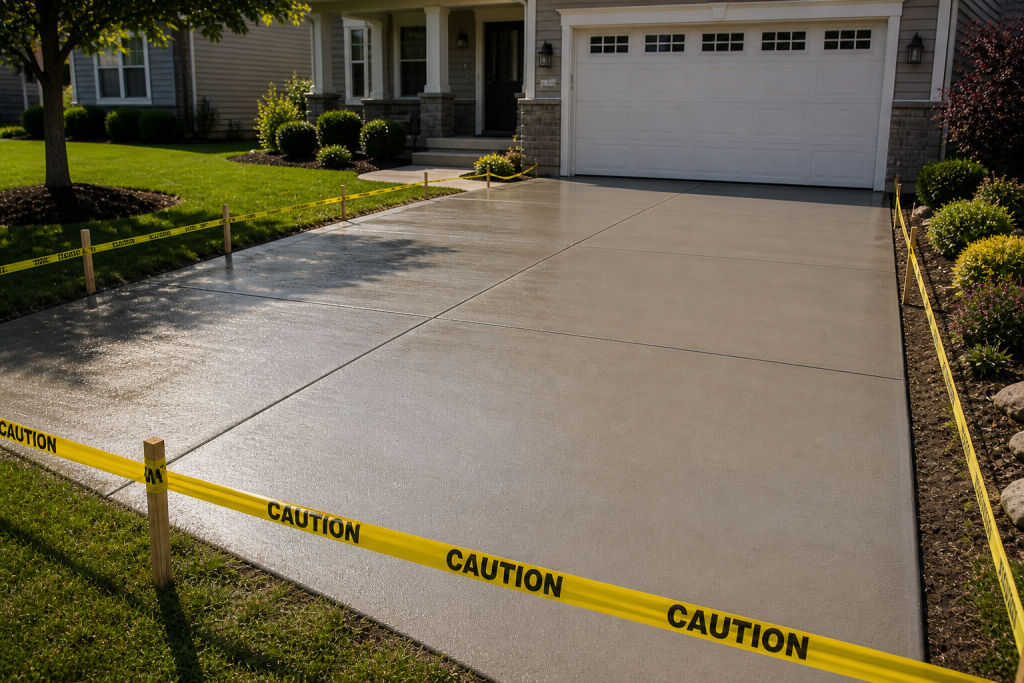
During the curing period, avoid placing any objects on the concrete surface, dragging items across it, allowing pets to walk on it, or doing anything that could leave marks in or damage the surface while it is still gaining strength. Even after foot traffic is permitted, be cautious about activities that could damage or stain the surface until it has fully cured. Your contractor may apply a curing compound to the surface that helps retain moisture during the curing process. This compound typically gives the surface a slight sheen or whitish appearance that will wear off over time. Do not attempt to wash off or scrub the curing compound, as it is performing an important function.
If your contractor recommends sealing the concrete after it has cured, this is typically done at least twenty-eight days after the pour, once the concrete has reached its full design strength. Sealing protects the surface from moisture penetration, staining, and freeze-thaw damage, and it enhances the appearance of colored and stamped surfaces. Ask your contractor about their sealing recommendations and timeline for your specific project.
Understand the Timeline and Curing Requirements

Ready to Prepare for Your Concrete Project

By taking these preparation steps before your concrete pour and following the curing guidelines afterward, you set the stage for a successful project and a beautiful, long-lasting result. If you have questions about preparing for your upcoming concrete project, the team at Black Rock Concrete is always happy to help. Contact us anytime. We serve homeowners throughout Valparaiso, Portage, Crown Point, Chesterton, Merrillville, Hobart, and all of Northwest Indiana.