Stamped vs. Regular Concrete: Which Is Right for You?
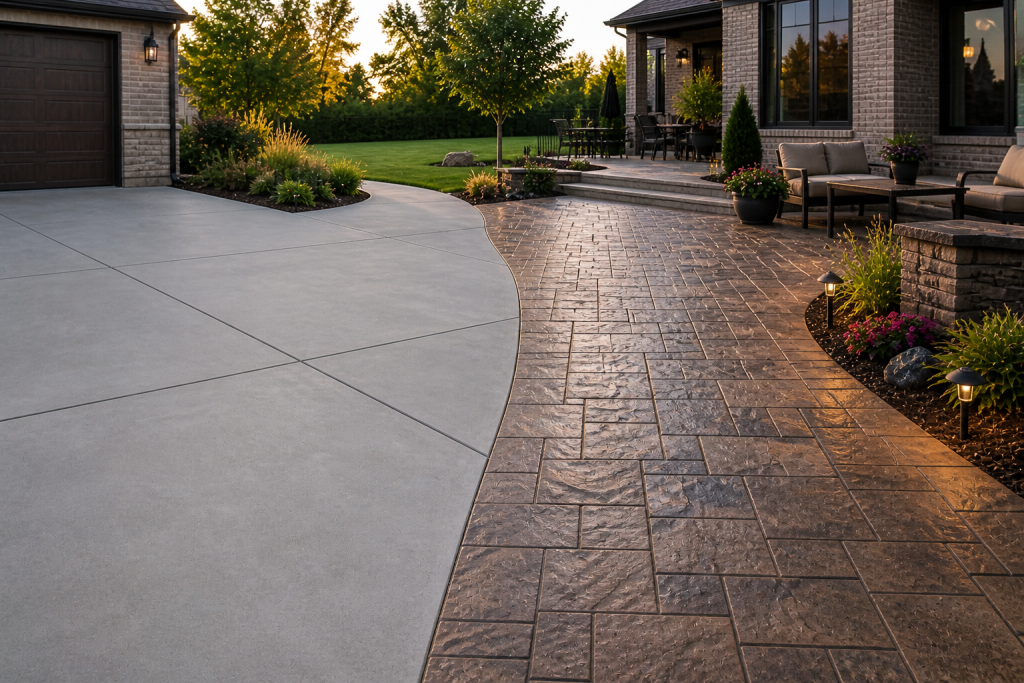
The Great Concrete Debate: Standard vs. Stamped

If you are planning a concrete project for your home in Northwest Indiana, whether it is a new driveway, patio, walkway, or pool deck, one of the biggest decisions you will face is whether to go with standard concrete or upgrade to stamped concrete. Both options have distinct advantages, and the right choice depends on your priorities, your budget, the specific application, and the look you want to achieve for your property.
At Black Rock Concrete, we install both standard and stamped concrete on a regular basis for homeowners throughout Valparaiso, Portage, Crown Point, Chesterton, Merrillville, Hobart, and all of Northwest Indiana. We have seen firsthand how each option performs over time in our region’s demanding climate, and we are happy to help homeowners weigh the pros and cons based on their individual circumstances. This guide provides an honest, comprehensive comparison to help you make an informed decision.
The bottom line upfront is that neither option is universally better than the other. Standard concrete is an excellent, time-tested material that delivers outstanding durability and value for the dollar. Stamped concrete elevates the visual impact of your project and adds a premium, custom look that can dramatically enhance your property’s curb appeal. The best choice for you depends on which factors matter most for your specific project.

Standard Concrete: The Reliable Workhorse
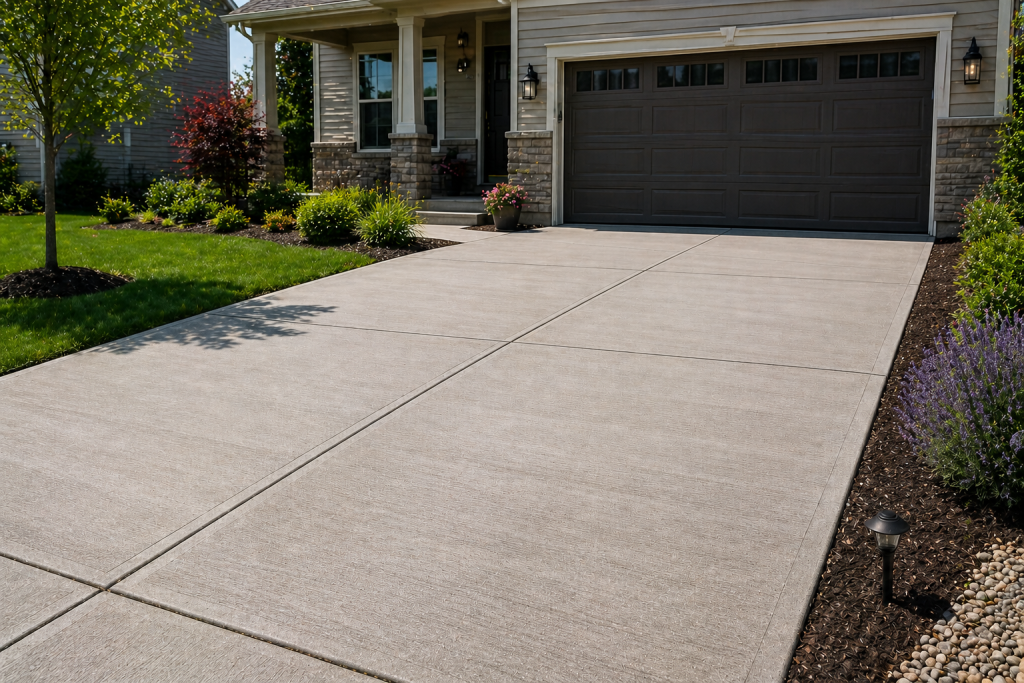
Standard concrete with a broom finish has been the go-to choice for residential driveways, sidewalks, patios, and other flatwork for generations, and for very good reason. It delivers a proven combination of strength, durability, affordability, and versatility that is hard to beat in any application. From a durability standpoint, standard concrete is exceptionally tough. A properly installed standard concrete slab with adequate thickness, reinforcement, and base preparation will typically last twenty-five to thirty years or more in Northwest Indiana’s climate with only basic maintenance. The broom-finished surface provides excellent traction in wet and icy conditions, which is a significant safety advantage during our long, slippery Indiana winters.
The cost advantage of standard concrete is significant. Depending on your specific project, a standard broom-finished installation will typically cost twenty-five to forty percent less than a comparable stamped concrete project. This savings can be substantial on larger projects like driveways and expansive patios, potentially freeing up budget for other home improvements or allowing you to increase the size of your concrete project within the same budget. Maintenance requirements for standard concrete are minimal. Regular sweeping, occasional washing, and periodic application of a concrete sealer are typically all that is needed to keep a standard concrete surface looking good and performing well for its full lifespan. Repairs, when eventually needed, are generally straightforward and relatively inexpensive.
Standard concrete is not limited to plain gray, either. Even within the standard concrete category, there are options for adding visual interest. Integral coloring can change the base color from standard gray to virtually any shade. Decorative scoring or sawcut patterns can create the appearance of stone or tile without the full cost of stamping. Colored borders or accent bands can frame a broom-finished surface for a polished, custom look at a modest additional investment. The main limitation of standard concrete is aesthetic. While it is clean, functional, and attractive in its own right, it does not have the visual wow factor that stamped concrete delivers. If creating a high-end, custom look is a top priority for your project, standard concrete may not fully satisfy your design ambitions.
Standard Concrete the Reliable Workhorse
Stamped Concrete the Designer Upgrade

Stamped Concrete: The Designer Upgrade

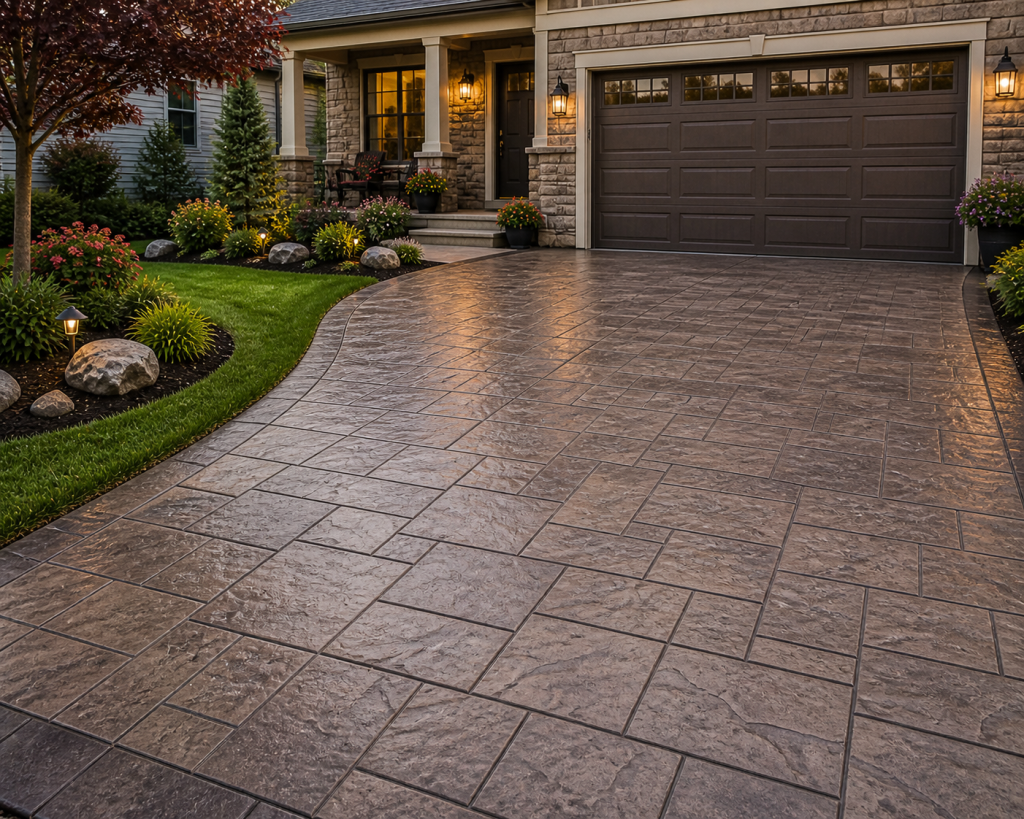
Stamped concrete takes the inherent strength and durability of concrete and adds a layer of artistic expression that can transform an ordinary surface into a genuinely stunning design element. By impressing patterns and textures into freshly poured concrete and combining them with integral coloring and accent release agents, stamped concrete can replicate the appearance of natural stone, brick, slate, cobblestone, wood, and many other premium materials at a fraction of their installed cost.
The visual impact of stamped concrete is its primary advantage and the reason most homeowners choose it. A well-executed stamped concrete patio or driveway can be a true showpiece that draws compliments from neighbors and visitors and significantly enhances your home’s overall curb appeal and property value. The range of available patterns, colors, and textures is vast, giving you the ability to create a completely custom look that perfectly complements your home’s architecture and your personal style.
Compared to the natural materials it imitates, stamped concrete offers a compelling value proposition. A stamped concrete patio that replicates the look of natural flagstone, for example, will typically cost considerably less than an actual flagstone installation, while providing a more uniform, crack-resistant, and low-maintenance surface. Similarly, a stamped driveway that mimics the appearance of brick pavers delivers the aesthetic appeal of brick without the issues of shifting, settling, weed growth, and ant hills that plague many paver installations.
Stamped concrete is also a monolithic surface, meaning it is a single, continuous slab rather than a collection of individual stones, bricks, or pavers. This eliminates the joints and seams where weeds grow, ants nest, and individual units can shift or settle out of alignment. The result is a surface that maintains its intended appearance with less ongoing maintenance than many of the natural materials it imitates. The cost premium for stamped concrete over standard concrete is real but reasonable when viewed in the context of what you are getting. Depending on the pattern complexity, number of colors, and project specifics, stamped concrete typically adds several dollars per square foot to the cost of a standard installation. For a typical patio or driveway project, this translates to a few thousand dollars in additional investment that buys a dramatically more impressive finished product.
Maintenance requirements for stamped concrete are somewhat higher than for standard concrete. Stamped surfaces should be resealed every two to three years to maintain their color vibrancy, protect against staining and moisture penetration, and preserve the surface texture and appearance. Resealing is a relatively simple and inexpensive process, but it is a recurring maintenance task that standard concrete does not require as frequently. One important consideration is that stamped concrete repairs can be more challenging and more visible than repairs to standard concrete. If a section of stamped concrete cracks or becomes damaged, matching the pattern, color, and texture during the repair process requires significant skill, and repaired areas may not be perfectly invisible. This is one reason why proper base preparation, adequate thickness, and appropriate reinforcement are especially important for stamped concrete installations.

Head-to-Head Comparison by Application
The best choice between standard and stamped concrete can vary depending on the specific application and how the surface will be used. Here is how the two options compare across the most common residential concrete projects. For driveways, both options work well structurally. Standard concrete is the more practical choice for homeowners who prioritize function and value, while stamped concrete is ideal for those who want their driveway to make a strong visual statement and are willing to invest in the aesthetic upgrade. Keep in mind that stamped driveways will need periodic resealing and that tire marks may be somewhat more visible on certain stamped textures than on a broom finish.
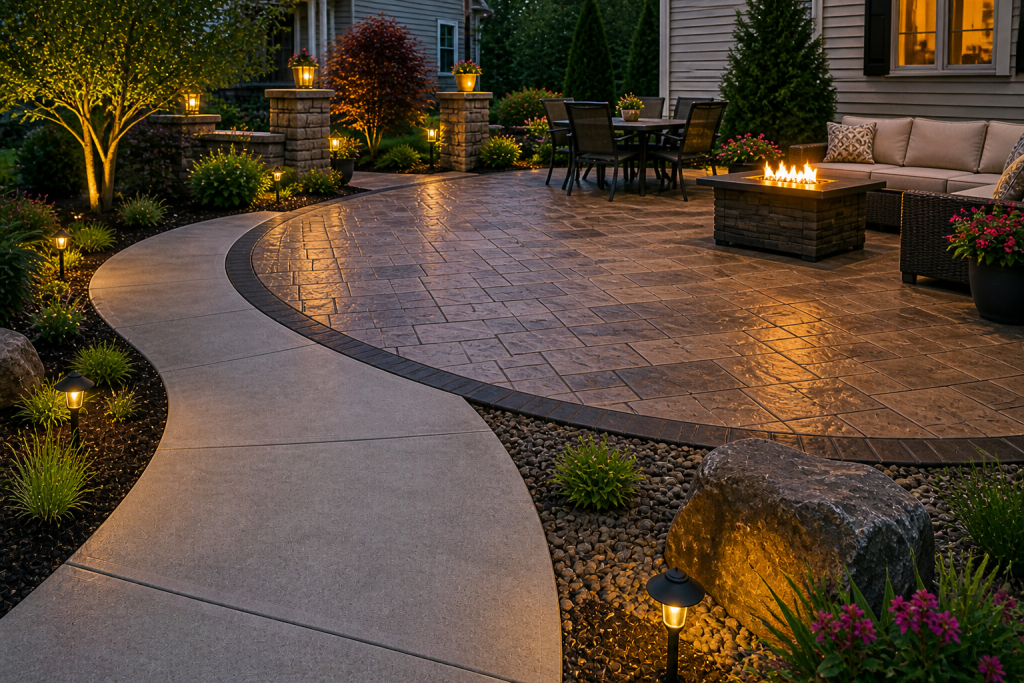
For patios and outdoor living areas, stamped concrete is arguably at its best. This is where the design flexibility and visual impact of stamping really shine, transforming a backyard slab into a beautiful outdoor room that rivals the look of a natural stone terrace. If your patio will be a focal point of your outdoor living and entertaining, stamped concrete is well worth considering. For a simple, functional patio where aesthetics are secondary, standard concrete remains an excellent and economical choice. For sidewalks and walkways, standard concrete is the most common and practical choice, offering a clean, professional appearance at a reasonable cost. Stamped walkways can be beautiful, particularly as design elements that connect a stamped patio or driveway with matching patterns and colors, but the additional cost may be harder to justify for utilitarian pathways.
For pool decks, both options work, but exposed aggregate or certain stamped textures deserve special consideration because they provide superior slip resistance when wet compared to a smooth troweled surface. Pool decks also benefit from the lighter colors available through integral coloring or certain stamp patterns, which help the surface stay cooler underfoot in direct sunlight. For porches and steps, either option can work, but stamped concrete can be particularly effective for creating a high-end look on prominent front porches and entryways. Standard concrete with a coordinating color or border treatment offers a good middle-ground option that dresses up the entry without the full stamped concrete investment.
Head to Head Comparison by Application

Making Your Decision: Questions to Ask Yourself

To determine which option is right for your project, consider the following questions as you weigh your priorities and talk with your contractor. No matter which option you choose, the most important factor in the success of your project is the quality of the installation. A properly installed standard concrete surface will dramatically outperform a poorly installed stamped surface, and vice versa. At Black Rock Concrete, we deliver the same exceptional quality and attention to detail regardless of the finish style, ensuring that your investment delivers the performance and longevity you expect.

How important is visual impact versus pure function?

If you are primarily looking for a durable, reliable surface and aesthetics are secondary, standard concrete is the clear value winner. If creating a beautiful, custom look is a high priority and you are willing to invest accordingly, stamped concrete delivers an aesthetic result that standard concrete simply cannot match.

What is your realistic budget for the project?

If budget is tight, investing in a well-built standard concrete installation is a far better decision than stretching for a stamped surface that requires compromises on thickness, base preparation, or other structural elements. A quality standard driveway will outperform a cheaply built stamped one every time.

How much maintenance are you willing to perform?

Standard concrete requires less ongoing maintenance than stamped concrete, which needs periodic resealing to maintain its appearance and protection. If you prefer a truly low-maintenance surface, standard concrete has the edge.

What is the primary use and location of the surface?

High-visibility areas like front entryways and backyard entertainment spaces benefit most from the visual upgrade of stamped concrete. Utilitarian surfaces like side walkways, garage aprons, and equipment pads rarely justify the additional investment.

Are you planning to match or coordinate with other concrete features on your property?

If you are installing multiple concrete surfaces, stamped concrete provides the ability to create a cohesive, unified design language across all of your outdoor spaces with matching patterns and colors.

Ready to Get Your Free Concrete Consultation

Contact Black Rock Concrete today for a free consultation on your concrete project. We will help you explore your options and choose the perfect solution for your home. We serve Valparaiso, Portage, Crown Point, Chesterton, Merrillville, Hobart, and all of Northwest Indiana.